Pay in installments of $7.23 with
 ,
,
 and
and

Shipping Estimate
USA
- USA
- CAN
- USA
- CAN
Ships within 48 hours · Estimated delivery Jul 5 - Jul 10
 Promo Codes Available:
For Your Every Summer RSVP, with Code: SUMMER15
Description
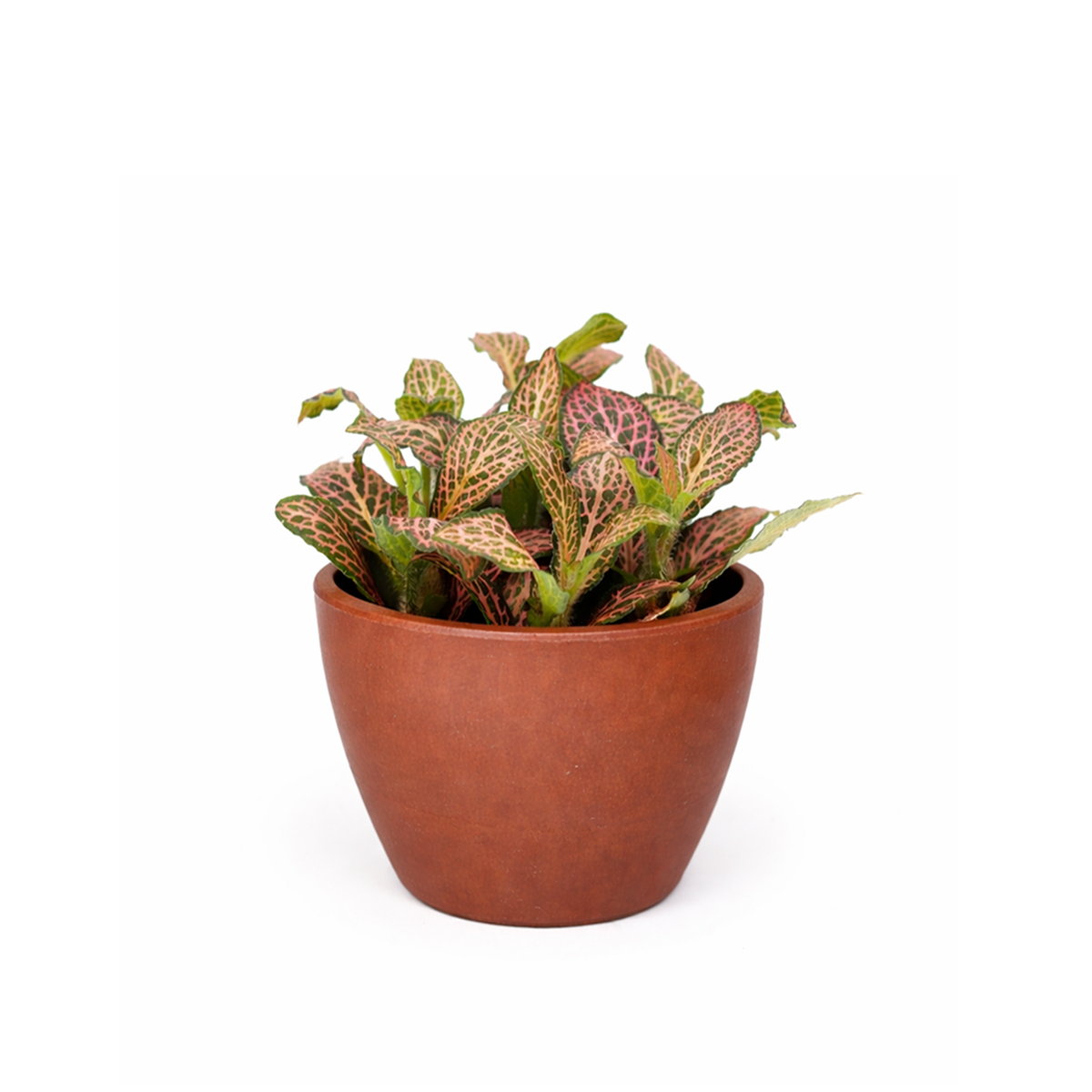
pink and green indoor plant Pink Nerve Plant (Fittonia Pink) - Live Tropical Feng Shui HouseplantDescription Light Soil Water Hardiness Nerve Plant Fittonia is a compact, evergreen perennial with dark green, ovate leaves highlighted by delicate, intricate veins. These veins come in various colors such as silvery white, pink, red, and green, and resemble the appearance of nerves, hence the name! These striking, network like veins contrast against the dark green background of the foliage, giving the plant its distinct, eye catching look. Native to
-
Nerve Plant Fittonia is a compact, evergreen perennial with dark green, ovate leaves highlighted by delicate, intricate veins. These veins come in various colors such as silvery-white, pink, red, and green, and resemble the appearance of nerves, hence the name! These striking, network-like veins contrast against the dark green background of the foliage, giving the plant its distinct, eye-catching look.
Native to the tropical rainforests of South America, including Peru, Bolivia, and Brazil, this plant thrives in warm, humid environments. Nerve plant typically grows 3 to 6 inches tall with a trailing spread of up to 18 inches, making it perfect for indoor spaces and terrariums.
Nerve Plant can be cultivated outdoors as a creeping ground cover in frost-free climates, thriving in locations with filtered sunlight. Its trailing growth habit allows it to spread easily over garden beds. Ideal for planting under taller trees or in spots protected from direct, harsh sunlight, it brings a lush, green carpet with intricate veining that adds depth to outdoor spaces.
Indoors, Fittonia is not the easiest plant for beginners, as it requires consistent humidity and careful attention to watering. It is sensitive to dry conditions and may wilt quickly if neglected, though it can bounce back with proper care.
Although it rarely flowers indoors, it may produce small, inconspicuous reddish or yellowish-white blooms. Its non-toxic nature makes it safe for homes with pets. Overall, the Nerve Plant’s vivid vein patterns and compact growth make it a stunning addition to any indoor plant collection.
-
Nerve Plant thrives in bright, indirect light but can also tolerate low-light conditions. Direct sunlight should be avoided as it can scorch the delicate leaves and cause the vibrant vein colors to fade.
This plant prefers warm temperatures between 65°F and 80°F and high humidity. It is sensitive to dry air and cooler temperatures, which can cause the leaves to wilt or drop.
Keep the soil consistently moist but not waterlogged. Water the plant when the top layer of soil feels dry, and avoid letting it dry out completely, as this can lead to wilting.
Use a well-draining potting mix with good moisture retention. Fertilize with a diluted, balanced liquid fertilizer once a month during the growing season to promote healthy growth.
Nerve Plant is non-toxic to both humans and pets, making it a safe choice for households with animals or children.
-
USDA Zone 11-12
Shipping Notes
- Free Standard Shipping on $100+ Orders to the USA.
- Except Preorder products are shipped in 48 hours.
- Delivery to the USA:
- Standard Shipping : 3-10 business days
- If time is of the essence, please consider selecting expedited delivery for faster service.
Exchange/Return Notes
- We offer a 30-day return/exchange service after receiving.
- Final sale items are not eligible for returns or exchanges.
- To process your return/exchange, please contact us at [email protected]
- Please click here for more details>>> Return & Exchange Policy
4.1 ★★★★★
Based on 2217 reviews
Sort
Product Reviews
★★★★★ 5
Five Stars
Great book by Josh
WAS THIS REVIEW HELPFUL?YesReportShare
Reviewed in the United States on December 19, 2015
★★★★★ 5
.thanks agai
Format: Hardcover
The book is hard to.good job thanks
WAS THIS REVIEW HELPFUL?YesReportShare
Reviewed in the United States on August 29, 2019
★★★★★ 4
Amazing compilation of historical facts that I never heard before
Format: Kindle
Our local priest quoted from this book on Easter Sunday and that made me curious to read it. The book starts slowly, but the second half is a great history lesson, loaded with information that I had never known. Compelling.
WAS THIS REVIEW HELPFUL?YesReportShare
Reviewed in the United States on April 6, 2016
★★★★★ 5
Excellent Introduction to Hemodynamics for a Resident or Fellow
Format: Paperback
Background: PGY-2 Internal Medicine Resident with no prior hemodynamic monitoring experience
Overall:
Fantastic introduction to the field.
The author will assume you know the following prior to starting the book:
- Moderate understanding of EKG’s
- Anatomical arrangement of the heart and its vessels
- Understanding some of the practical effects of atrial fibrillation (lack of an atrial contraction, etc)
Specifics:
The book can be picked up without significant prior knowledge of hemodynamic monitoring. I initially tried to read Hemodynamic Rounds, and the authors of that book did not introduce significant pieces of information, such as the normal pressures of the heart chambers, what each wave means on the monitor, and how is each chamber of the heart/vessel represented on the monitor (where do I look to see the left ventricular pressure?).
In contrast to that, Dr. Hanna provides a book that appears to be intended for residents/cardiology fellows or zealous pre-cardiology interns who are looking for an introduction to the field that maintains enough depth to be practical. Its first section goes over the relevant physiology and pathophysiology and the mechanical/hemodynamic representation. The second section is a series of practice problems with excellent explanations which reviews all of the prior concepts and helps to solidify them in the reader’s mind. The reader will learn to appreciate the relevant waveforms and their relevant representations, the normal values for the cardiac chambers and vessels, and eventually the changes to these normal values during pathologic states. As others have mentioned, it is concise, but this also makes it a bit dense initially when the reader encounters the basic four waveforms and attempts to memorize the normal pressures. Once you get over that initial learning curve, the rest of the first section goes a bit faster.
Overall, I’m very happy I purchased this book, and I feel that it has prepared me very well for time spent in the cardiac ICU.
WAS THIS REVIEW HELPFUL?YesReportShare
Reviewed in the United States on July 25, 2019
★★★★★ 5
Info not to be found elsewhere ...
Format: Paperback
I am a cardiologist in my 50s. I have long been interested in hemodynamics and have an extensive home file system and library of Cardiovascular related books and journal articles. I thought I understood hemodynamics and tracings very well. However this book is a treasure trove of info that simply cannot be found in other publications. It has been a very worthwhile purchase. Highly recommended. This is best suited for cardiology fellows and beyond in my opinion. This info is simply not to be found elsewhere. It is as if a grey haired attending is pointing out minutiae to you that you had not realized was buried in the tracings. Well written and easy to digest. It is best to have a good understanding of hemodynamics and waveforms before reading this though. The correlation with ECHO and diastolic issues is also very good. (This book should be required reading for all cardiology fellows - invasive or noninvasive)
WAS THIS REVIEW HELPFUL?YesReportShare
Reviewed in the United States on February 7, 2016